
-
Departments
-
- Departments Accounting Administration Aging and Disability Resource Center Arts & Culture Program Building Services Child Support Circuit Courts Clerk of Courts Coroner Corporation Counsel County Clerk Justice, Diversion, and Support
- Departments DNR Forester District Attorney's Office Emergency Management Environmental Health Extension Sauk County Health Care Center Health Highway Human Services Land Information/GIS Land Resources and Environment Management Information Systems
- Departments Parks and Recreation Personnel Register in Probate Register of Deeds Sheriff's Office Surveyor Treasurer Tri County Airport Veterans Service Victim Witness County Directory Social Media Links
-
-
Government
-
- County Board Board Members Meeting & Agendas Video Recordings Committees County Departments County Directory County Ordinances County Social Media Links Building Locations West Square Building Historic Court House Courthouse Annex Law Enforcement Center Health Care Center Highway Shop Human Services (Reedsburg) Parks and Recreation
- Calendar Meetings and Agendas Upcoming Meetings Meeting Videos on Granicus Video Recordings Forms and Documents Forms, Permits, and Applications Documents, Reports, and Presentations Policies Legal Notices/Press Releases Press Releases Legal Notices Foreclosure List Sheriff Incident Reports Open Records Request Sheriff's Dept Records General Records Request
- Voting / Elections MyVote - Polling Locations Register MyVote WI Election Results Bids and Proposals Submitting Bids / Bid Process Current RFPs, RFBs, RFQs State Government State Agencies Hours of Operation Hours
-
-
Community
-
-
Community News
Business / Economic Development Place Plan Start Up Resources Business Financing Chambers of Commerce Registration of Firm Name Creating an LLC Permits Revolving Loan Fund (RLF)/CDBG Persons with Disabilities Apply for Benefits Disability Rights Wisconsin Disability Benefit Specialists Housing Transportation Caregiver Resources Employment Training - Residents Voting Dog License Elected Officials Parks Recycling Renters Libraries Marriage School Districts Severe Weather Shelters Road Conditions DMV Services Sheriff's Incident Reports Online Services List of Online Services GIS Tax Parcel iSite Property Tax Info (ALRS) Pay Clerk of Court Fees
- Homeowner/Property Property Tax Information Property Maps Zoning Information Permits Recycling School Districts Residential Vacation Check Form Foreclosure List Family and Health Nurse-Family Partnership Immunization Program Women Infant Children Parks and Recreation Arts and Culture Libraries School Districts
- Seniors Retirement information Elderly Benefit Specialists Transportation Long Term Care Services Project Lifesaver Caregiver Resources Nutrition & Dining Centers Employment and Training Veterans Federal VA Services State Programs & Services Employment & Education Support Groups Health Care Home Loans Pension Benefits Transportation
-
Community News
-
-
Explore
-
-
ExploreSaukCounty.com
Parks Hemlock Park Lake Redstone Park Man Mound Park North End Boat Landing Sauk County Forest Summer Oaks Boat Landing Timme's Mill Weidman Woods White Mound Park Yellow Thunder Park -
Video Tour of Sauk County
Trails Great Sauk State Trail Hiking Horseback Skiing Snowmobiling Snowshoeing Outdoors & Nature Boat Landings Fishing Hunting Lakes, Rivers & Creeks Local Parks Natural Areas & Public Lands Nature Centers & Conservancies State Parks
Places to Eat & Drink Things to Do Places to Stay
-
ExploreSaukCounty.com
-
-
I Want To…
-
- Apply Marriage License Employment Passport Child Support Public Assistance Food Share Benefits BadgerCare Project Lifesaver Veteran's Benefits Dog License Permits Board of Adjustment Appeal/Zoning Appeal Arts & Culture Grants
- Request Obtain? Birth, Marriage, & Death Certificates Divorce Decree Court Transcripts White Mound Camping Reservation County Park Sticker Transportation Services Hunting Fishing Rec Permits Timber Cutting Permits Vehicle Registration Drinking Water Test Kits Soil Test Kits Pay Court Fees Traffic Tickets Property Taxes Child Support CPZ Fees
- File Divorce Will Deeds Property Liens Small Claims Guardianship Permits Claim for Service Related Disability (Veteran's) Appeal Zoning Ordinances Certified Survey Map Volunteer Aging & Disability UW Extension Parks Land Conservation Neighbor in Need
- Find Agendas and Minutes Property Tax Info Maps Foreclosures Sheriff's Incident Reports Warrant List Sex Offender Registry Zoning Info Voting/Election Info Sanitary/Septic Info Recycling Info Caregiver Relief/Assistance Genealogy Records Vote Register to Vote Polling Places
-
Chapter 26 GIS Prioritization Plan

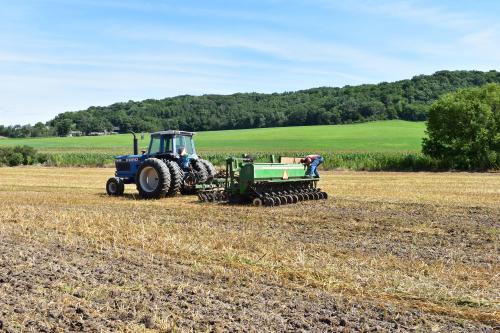
The prioritization plan was developed to aid in the inspection process to ensure compliance with Sauk County Chapter 26 and state performance standards. To remove personal, political, and social biases when selecting parcels, it is important to seek environmentally sensitive areas with the greatest need for protection and areas with the greatest potential for resource concerns.
Objectives
- To ensure effective implementation of the Sauk County Land Resources and Environment Department (LRE) Land and Water Resource Management Plan.
- Strategically conduct inspections to ensure compliance with Sauk County Chapter 26 Agricultural Performance Standards and Manure Management Ordinance.
- Install best management practices on priority parcels and cropland to improve the natural resources and public health of Sauk County.
Prioritization
Several levels of prioritization have been developed to help the LRE Department be most effective at implementing Chapter 26.
Voluntary Participation
Regardless of location in the county, landowners with noncompliant sites that voluntarily seek compliance without previous designation by the LRE Department will acquire priority status and will receive priority attention through available technical assistance and cost sharing. Cost-share funds will not be provided to landowners previously designated as compliant.
Complaints
Regardless of location in the county, when the LRE Department receives complaints, the complaint will receive priority status and attention through available technical assistance and cost sharing. Cost-share funds will not be provided to landowners previously designated as compliant.
Preceding Compliance Requirements
Regardless of location in the county, participants in the Farmland Preservation Program, sites with manure storages, sites with active operation and maintenance agreements, etc. will receive priority attention after voluntary participation and complaints.
Geographic Prioritization
After working through the previously stated priorities, the LRE Department will execute geographically prioritized implementation throughout the county.
- The Erosion Vulnerability Assessment for Agricultural Lands (EVAAL) model was used as the basis for this assessment because it captures the soil loss potential of agricultural lands. It starts by hydrologically conditioning a Digital Elevation Model (DEM) to fill artificial sinks and break digital dams. It then identifies internally drained areas and removes those from the analysis. Then, it downloads precipitation data (at the county level) for a 10 year, 24 hour rain event. It then draws on soil data and crop cover data to estimate soil loss using the Universal Soil Loss Equation (USLE). It also estimates Stream Power Index (SPI). The USLE and SPI layers are then combined to create the Erosion Vulnerability Index (EVI) layer. This is a raster layer in which each cell of the raster is ranked relative to every other cell in the area the EVAAL analysis was completed on. In this case, each HUC12 watershed of Sauk County had an EVAAL analysis performed.
- A score is given to each agriculture parcel through the EVAAL process. Each parcel is assigned a EVI score from 1-10. Next, each parcel is awarded 1 point for the presence of a variety of factors including: presence of livestock, presence of restricted soils (1 point for 1 category, 2 points for 2 categories), presence of a Surface Water Quality Management Area (SWQMA) within the parcel, if the parcel is located within a watershed containing 303(d) listed waters, if a 303(d) listed waterway runs through a parcel, and if the parcel is in noncompliance with the FPP program. These factors were multiplied by 0.1 and added to the EVI score to rank the parcels within each EVI value.
- A score of 1 means that parcel is in the lowest 10% of EVI scores in that watershed, meaning that parcel is at or near the lowest risk in its particular watershed. Conversely, a score of 10 means that parcel is in the highest percentile category and at the highest risk in its watershed.
Implementation
Over the next several years, the LRE Department will be conducting site visits to evaluate compliance with Chapter 26. In 2026, the department will visit the watershed identified as most vulnerable to resource concerns and will visit the remaining watersheds in subsequent years. Annual stakeholder meetings will be held to provide updates on implementation progress.
Landowners interested in receiving updates and being informed of future meetings should sign up for email notifications and select the “Crops and Soils” topic.
